

A Story About Values, Pricing, and Finally Finding My People
It started with burnout
For nearly three decades, I lived in the world of big numbers.
As a Finance Director and Internal Auditor in large multinational manufacturing organisations, I was the person other people came to when the figures did not add up. I understood balance sheets before breakfast. I could read a P&L in minutes and spot the story hiding inside it. By every conventional measure, I was successful.
And then I burnt out.
Not dramatically. Not all at once. But gradually, and then completely, the corporate world I had given so much of myself to stopped feeling like somewhere I belonged. I had spent years helping enormous organisations understand their finances; and somewhere along the way, I had lost sight of what I actually wanted my own life to look like.
Starting over was the bravest and most terrifying thing I have ever done.
Building something different deliberately
When I launched Purple Squirrel Consultancy, I knew exactly what I wanted to do: help small business owners feel more confident about their finances and their decisions. Not the big corporates. Not the high-growth startups chasing investment. The people running small, real businesses; the ones who are brilliant at what they do but find the business side of things overwhelming.
I also made a deliberate decision about pricing that raised a few eyebrows.
I kept my prices low. I ran affordable workshops. I made my services accessible to people in the early years of their business, because those are the people who need support the most and are often the least able to pay for it.
I cannot tell you how many times I have been told I should charge more. That I should value myself more. That I should aim higher, target people who can actually afford me. It has been said with the best of intentions, and I understand the business logic behind it. But it never sat well with me.
That question still drives everything I do.
The problem with helping "everyone"
Here is something I have had to be honest with myself about.
For the last couple of years, I have been saying that I can help anyone. Any small business owner, any sector, any stage. And while that is true in theory; in practice, it does not work. As anyone who has looked into marketing their business will know, speaking to everyone means reaching no one. I was casting too wide a net and, as a result, my message was landing with no one in particular.
I had values. I had experience. I had genuine care for the people I worked with. What I did not have was a clear and specific answer to the question: who exactly is this for?
Figuring that out has taken time. But I finally feel I have found my answer.
Finding my people
The women I most want to work with are not looking for world domination. They are not chasing a six-figure launch or planning to build a business empire. They are people who want to make a living doing what they love; work that genuinely helps other people; and build something that fits around their real life rather than consuming it entirely.
They are heart-led. They chose their work because it means something. They are reflexologists and counsellors, makers and coaches, yoga teachers and aestheticians; women who became practitioners because they care, not because they wanted to run a company.
And they share the same values I do.
That realisation felt important. I had spent two years trying to speak to everyone, and all along my ideal clients were the people who reminded me most of myself. Not the Finance Director version, but the version that existed underneath all of that. The one who cared deeply, worked constantly, and quietly wondered whether she was doing any of it right.
I started to notice a pattern when I paid attention to it. The reflexologist who had built a loyal client base but had no idea whether her business was actually profitable. The ceramicist who loved every hour she spent at her wheel but dreaded opening her bank app. The counsellor who was genuinely changing lives but could not bring herself to put her prices up. Women who were brilliant at what they did; running on passion and caffeine; spinning plates and holding everything together; and carrying a quiet, private fear that maybe they just were not cut out for the business side of things.

The bit nobody talks about
Here is something that does not get said enough.
Financial conversations can feel deeply uncomfortable for a lot of women running small businesses. Not just confusing; uncomfortable. Even shameful. There is a quiet internal voice that says: I should understand this by now. I should be further along. I should be more successful.
Social media does not help. It is full of women who appear to have it all sorted; thriving businesses, full client books, confident pricing. And when your own bank balance does not reflect the hours you are putting in, it is very easy to conclude that you are the problem.

Most of the women I meet are also juggling far more than just their business. There is the school run and the homework help. There are friendships to maintain and family to support. There is the invisible second shift that never quite ends. The business gets squeezed into the margins of the day, and the big picture thinking; the planning, the financial review, the strategy; never seems to happen because there is always something more urgent.
This is not a personal failing. It is just real life. And any coaching programme worth its name should be built around that reality, not in spite of it.
Why I built The Acorn Club
All of this is why I created The Acorn Club.
Not because I wanted to launch a programme. Not because someone told me it was a smart business move. But because I kept meeting women who needed exactly the kind of support I wish had existed when I was finding my feet; warm, honest, judgment-free, financially grounded, and built around the whole person rather than just the business.
I wanted to create a space where looking at your numbers does not have to feel terrifying. Where you can say "I have no idea what my profit margin is" without shame. Where the community around you actually understands what it is like to be doing this; the love of the work, the weight of the admin, the strange mix of pride and panic that comes with running your own business while keeping the rest of your life going.
I also wanted to honour the value question I have always asked. My pricing for The Acorn Club is deliberately accessible. It is not cheap; it is a proper investment in yourself and your business; but it is priced for the women I actually want to help, not for the premium market I have been advised to target.
A note on this founding cohort
The Acorn Club is launching for the very first time this year, with a small founding cohort of just eight women.
I want the right eight women in the room; women whose energy, honesty, and presence will help shape every cohort that follows. In return, they get the full programme at a special founding member price that will not be repeated, and the knowledge that they were there first.
If any of this has resonated with you; if you read the bit about dreading your bank app and thought "that is me"; if you are brilliant at what you do and quietly exhausted by everything around it; I would genuinely love to hear from you.
This is not for everyone. It is for the women who share these values. The ones who are not chasing world domination; just a life that feels as good as the work they do.
And if that is you, your acorn is already planted.

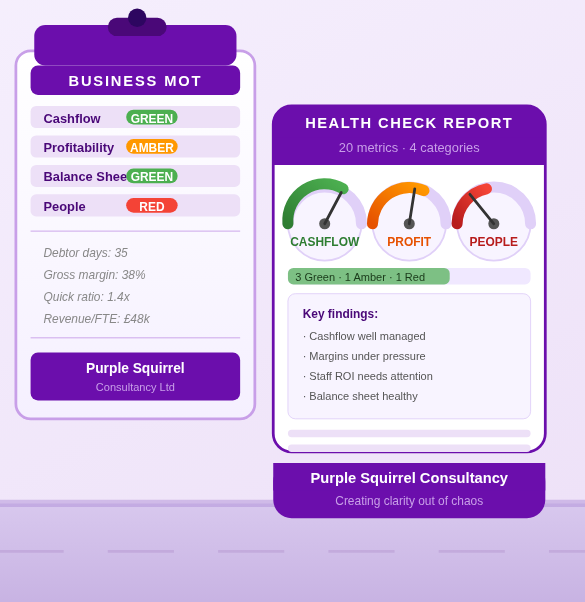
 Being a Purple Squirrel isn’t about scurrying around aimlessly! It’s about being a business leader at the top of your game. Much like the sharp, resourceful squirrel, a successful business person is agile, strategic, and always prepared for the future. Here are 10 daily actions to help you channel the Purple Squirrel and achieve peak performance in your business life.
 We all know that a Profit & Loss statement tells us how much money we’ve made in that period. But when was the last time that you REALLY dug into all the numbers on that page?
 This is one of life’s fundamental facts. If we measure, monitor, track or try to control something, it will get better. BUT….. if we are measuring the wrong thing, it can often result in an unexpected result somewhere else.